We really help animals....Read her story


Click on her picture to make a donation so that we can go on helping chained dogs like we helped her.

 THE watchdog

Read all about it if it's animal news!

Daily top stories

Return to Watch Dog "TOP STORIES" list here

Cheech's Page
Cheech the puppy was removed from the Delta SPCA to safety on June 16/04
by SPCA staff and volunteers
Read Barbara Yaffe article


The list of SPCA false statements
AAS's written assessment
Read the phone calls that led to AAS's involvement
See AAS's offer to foster and rehabilitate Cheech
All Cheech's videos, CTV shows rescue, CTV shows SPCA lying about his assessment, AAS's real assessment, "The dog Who Lunges at Children", and  "Cheech's Song". 
Letters from Cheech... Hi Everyone, I'm having so much fun now!


Cheech, the dog who got away. 


Shake-a-paw


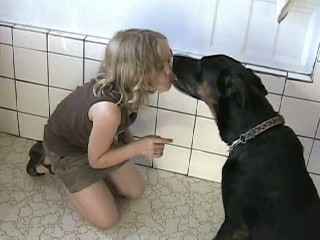
Kisses for Ali.


Good dog Cheech


Begging Ali for a treat.


What a nice kiss!


Grooming...a strange man and a strange tool, yet Cheech sits still and just watches


Thank you Cheechy!


Cheech gently nibbling on Ali's hand being very careful not to be rough


Lifting test one.  Most dogs hate this and jump away. Cheech was happy to just stay in Ali's arms.


Lifting test two. Cheech as limp as a sack of coals, completely trusting. 


Cheech lets Ali hug him, a very dominant gesture, one that most dogs resent

How AAS was asked to help save Cheech

The morning of June 16th AAS was phoned by a frantic five-year Delta SPCA volunteer who we will call B.B. She begged us to somehow stop the killing of an eight-month old pup named Cheech who was scheduled for destruction sometime that day. Here is what we were told by B.B.

Cheech is a Lab Rottweiler who had been chained from the age of eight weeks, probably at a grow-op, and who had been brought to the Delta SPCA sometime in March. His temperament was essentially cheerful, trusting, and very affectionate, but at first he was fearful of men and rough behaviour, very common in dogs that have been abused. He expressed his fear only verbally, by growling - clear dog-speak for wanting you to stop whatever you are doing.

He has not ever bitten anyone. He has never been a danger to anyone.

B.B. told us that before the installation by CEO Craig Daniell of Michelle Rodgers, as manager, the staff at the Delta SPCA had created the best, most humane SPCA in the province. Since the advent of Rodgers, staff felt they were being discouraged from doing their best for the animals and tensions built.

When Cheech first arrived at the Delta SPCA he was put through a Dog Temperament Assessment Test (DTAT) which he passed easily, being assessed at level "yellow", an adoptable level. Recommendations were made to help him with fear anxiety.

(B.B. also told us some shocking details of disappearing money, which we will reveal in a sub post.)

We next phoned Delta SPCA's volunteer professional trainer, Amber Cottle, who told us that she too had assessed Cheech as rehabilitatible who only needed a bit more time and work. She too was trying to stop Rodgers from killing Cheech.

We pieced together the series of events that led to the destruction order. Cheech was doing well and was sometimes allowed in the front office until one day a man came into the SPCA carrying a rabbit. We were told that Manager Rodgers either roughly grabbed Cheech by the collar or pulled roughly on his lead to get him out of the public area. In the hubbub and stress, Cheech growled at Rodgers in objection. He did not bite and he went were he was being led, but from that moment it is our understanding that Cheech was doomed.

Rodgers called in the SPCA's Head Office dog assessors for a "scientific" justification for killing Cheech, which she got. We were told that Barry McKnight, large and uniformed, went into Cheech's kennel with an object, probably a broom, and Cheech attacked the object. McKnight told Rodgers that Cheech needed more work but the decision was up to her.

Another long-time dog rescuer told us that Rodgers does not have a clue about dog behaviour, asking her for advice about her own aggressive dog. We can state unequivocally that almost no SPCA staff know or have ever known what a dog's behaviour means, and nor do they care to learn. Even now SPCA web sites tell adoptors to crate or isolate dogs that suffer from separation anxiety - blatant stupidity and cruelty.

We then phoned Manager Rodgers, who acknowledged AAS's reputation for successful rehabilitation of dogs like Cheech. We stated repeatedly and clearly our offer to foster Cheech at our expense and to rehabilitate him. We asked her to consider our offer and to postpone the destruction of Cheech.

Twenty minutes later we were phoned by long-time Delta SPCA worker Amanda Muir. Amanda is one of the staff who is responsible for all the humane improvements that were made before the advent of Daniell/Rodgers. Amanda is also the fearless and compassionate person who was attacked by a guard dog last year and had both her arms badly injured. She never once blamed the dog. She has been on WCB leave since the attack but continued to volunteer daily at the Delta SPCA.

Twenty minutes after our offer to Rodgers we were phoned by a fearful Amanda telling us that the order to destroy would not be postponed or rescinded. We asked her to quickly remind Rodgers of our involvement and told her that we were going to immediately phone CEO Craig Daniell.

We did and we stated the whole case and repeated our offer to foster Cheech several times. We asked him to phone Rodgers and tell her to postpone the destruction order until our offer could be considered and to get more input from trainers and volunteers. He would not promise us anything.

Daniell phoned us back shortly and told us that Bob Busch, General Manager Operations was on his way to the Delta SPCA. Daniell would not tell us if Cheech's life would be spared.

Then we were phoned from the SPCA parking lot by another long-time volunteer who we will call D.W., frantically telling us that Mark Thakur, Manager Vancouver SPCA had arrived and that Cheech was about to be led into the euthanasia room. Daniell had sent in his troops! We gave her the phone number of CTV and told her to phone quickly.

Soon after Cheech was removed by someone who took him to the Tsawwassen Animal Hospital because of a sore leg that the SPCA had ignored. The female vet there was asked if she would euthanize Cheech if the SPCA asked her to. She replied unequivocally that she would not, that Cheech was clearly a fine dog.

Cheech was then taken to a private home.

The list of false statements made by the SPCA to the media and to individuals
 
The Province June 18/04

"Four SPCA assessors deemed Cheech too vicious and unpredictable, especially toward men, and recommended he be put down, said spokeswoman Lorie Chortyk."

Amanda Muir - There were three assessments in total that were done.  One by Patti (from the Richmond SPCA a month or more after his arrival at the shelter, one by Delta SPCA employee Bruce Kilborn that was not SPCA ordered but done to assess Cheech's progress - neither of these assessments showed Cheech to be aggressive or vicious. 

The last assessment was done as directed by Michelle Rodgers.  Cheech did not bite his assessor although he was corned by this unknown man in his kennel.  No other assessments were ever done.  Cheech never bit anyone, no staff, no volunteers, not even this last assessor. 

The SPCA's primary concern in this case is that Cheech poses a threat to the public, Chortyk said, adding that the society has a moral and legal duty to protect the public from harmful animals.

"We did everything in our power to help that dog, because euthanasia is always the last resort," Chortyk said. "[Muir] made the situation happen, we didn't. We didn't ask her to steal a dog from the shelter."

The SPCA did nothing to help Cheech.  There was no rehabilitation except that done by volunteers. 

Amanda Muir -  Cheech spent lots of time socializing with staff, volunteers and other shelter animals.  No rehabilitation was done other than that of these volunteers and staff, one volunteer was a dog trainer and offered to take Cheech into her home to continue training but was not allowed to do so.

South Delta Leader June 18/04

"All our attempts to help it recover have been unsuccessful," Chortyk said. "Unfortunately, all the assessments have shown it was becoming increasingly aggressive around men and children." The decision to euthanize Cheech wasn't made lightly, Chortyk added, and four people signed off on the decision.

Amanda Muir - No SPCA upper Management met Cheech. Mark Takhar, Manager Vancouver/Burnaby SPCA (who to all appearances was is afraid of most dogs and had NO training or animal experience) and Michelle Rodgers were the only management he ever met.  Chortyk did not meet Cheech nor did Daniell or any other management/HO representative that wanted to see Cheech put to sleep (pts).  Cheech was NEVER out with any young children but was walked by several men, families with older children (young teens) as well as other dogs.  There was no aggressive behaviour reported or seen during these walks.  In fact, a couple with a teenage daughter came the afternoon Cheech had been scheduled to be pts to adopt him.

CTV News at 6pm June 19/04

Nadine Gourkow BC SPCA Animal Welfare Supervisor: He's very ambivalent. He's very unpredictable. And there's a high potential that he will bite without exactly the person holding the leash knowing what has set him off.

Bob Busch SPCA Regional Manager: We must not let an animal that has a chance to be dangerous out in public. We would be irresponsible as the SPCA if we did that, and I think the public expects more of us.

Amanda Muir -- Neither Gourkow or Busch met Cheech.  Cheech was to go to a trainers home for further training and foster care with a promise of his return for euthanasia if he became aggressive or did not continue to improve as he had every day since coming to the SPCA.  Cheech was never to be let loose in public although there was no reason he should not have been.  Michelle Rodgers and Bob Busch refused to even give him a chance to be rehabilitated as their own mandates insist must be done before a dog is pts.


The Sun June 19/04

 "After showing on the first test that he had anger management issues, Cheech got "progressively worse in the shelter," said Nadine Gourkow, animal welfare manager of the SPCA office in Vancouver. During the second test, Cheech "showed he had a very high level of fearfulness" by growling, showing teeth, jumping up and down, and cornering himself in the back of the cage, she says. Then, when the dog tester wasn't looking, Cheech lunged at him."

Amanda Muir -- Cheech had NO anger issues noted in either of his first two assessments.  Cheech did nothing but improve in the shelter until the day Michelle Rodgers grabbed him, unexpectedly, from behind, when he was barking at a stranger who entered the shelter.  Cheech did not bite or snap, he realized in a second who grabbed him and returned to his usual demeanor.  Had Michelle done what she should have, verbally commanded Cheech to stop barking he would have stopped his barking.  This barking was only a protective gesture as Cheech had started to consider the shelter his home.  That was part of the reason Cheech was up front in the shelter in the first place, to be encouraged to behave appropriately.  If Michelle had reacted as she should have with a simple 'that's enough' or 'leave it' command would have been all Cheech needed to stop barking.   Cheech thrived when given verbal commands followed by praise, he was a quick learner and he loved to learn and please people.  

Global News 6pm June 19/04

Nadine Gourkow Animal Welfare Manager: He has attempted to bite and people have protected themselves by, the two people that he has attacked have put something in between themselves and the dog and he bit the object instead.

Amanda Muir -- This must be in reference to his last assessment and as this is the only time Cheech ever snapped at anything.  Cheech was put in a position where he had to protect himself, or felt he had to.  He was cornered in the kennel by a strange man carrying a brush and Cheech snapped at the brush NOT the assessor!  There was never another 'incident' as described that I or anyone who worked with Cheech was aware of.

Global Noon News June 19/04

Nadine Gourkow: The feeling was with Cheech that the rehabilitation he might need had very, very low chances of success, but even the success that might have happened wouldn't have been so he is actually healed. But that perhaps it could be managed, but that would be to a point where he would have to have a lot of restrictions such as being muzzled, being leashed, being things that really would have reduced his welfare.

Amanda Muir -- Being leashed and muzzled is better than being dead and is something the trainer offered to do if she took him in, as a precaution, not because he needed to be.

The Sun June 19/04

"All of the people who assessed the dog since April ... say he's too dangerous to be in the community," says SPCA spokeswoman Lorie Chortyk. 

Amanda Muir -- All the people are three people and no one ever said this to my knowledge...no one that actually met Cheech anyway.

The Sun June 21/04

SPCA spokeswoman Lorie Chortyk said the agency empathizes with Cheech's supporters, but will not back down on its view that the dog should be destroyed.

"It's difficult because it's very emotional," Chortyk said. "But this dog has displayed incredibly unpredictable behaviour.

Cheech displayed no unpredictable behaviour.  He showed consistent, but improving, timidity around men he did not know.  He showed trust and love for men he did know.

"McConnell and others have offered to adopt Cheech and keep him isolated while he is trained and rehabilitated, but Chortyk said there is no possibility the SPCA will agree to such an arrangement.

"It's kind of like saying 'We have a sexual predator, but if you sign over, you can take him into your kindergarten class.'"

AAS: Gross fear-mongering.

Amanda Muir -- Horrible comparison that demonstrates Chortyk's lack of understanding of the situation and her lack of tact.

Surrey Leader June 22/04

SPCA spokesperson Lorie Chortyk said the former guard dog could not be rehabilitated. "All our attempts to help it recover have been unsuccessful," Chortyk said. "Unfortunately, all the assessments have shown it was becoming increasingly aggressive around men and children."

Cheech was not ever a guard dog, he was a puppy, under a year old who had been a yard dog who got loose and ran around the neighbourhood so much that the owner surrendered him to the SPCA, first getting a promise from the SPCA that they would not ever hurt his puppy. The first assessment gave Cheech a very high rating. The second assessment was also good.  The third assessment, AAS believes was done on the day Cheech was scheduled to be destroyed after AAS phoned CEO Craig Daniell and offered to rehabilitate Cheech at AAS's expense, we believe is the assessment the SPCA used to declare Cheech a dangerous dog.

Amanda Muir -- He had been in a yard at a business in the Tilbury industrial park with a man who had saved him from an abusive home.  He and Cheech lived there with another dog.  Cheech's new owner did chain him at times so he would not run off as he liked to do.  He was surrendered as Judy states as Cheech was running loose often, when not chained which his owner did not like to do.  The SPCA made a promise to find him a new and better home than this man could give him. 

"Chortyk said it's not a matter of money or expertise, but rather the safety of people who might come in contact with Cheech, adding Stone's organization has not assessed the dog and doesn't understand it's disposition. Delta Police were called Wednesday to recover the dog but were unsuccessful. Chortyk said the SPCA continues to work with police to get Cheech back. Chortyk said the dog would not be reassessed or given more time for rehabilitation."

Amanda Muir -- AAS offered to assess, train and take full responsibility for Cheech before taking him in but was not allowed to.

June 18/04 Email from Chortyk to AAS supporter Lana Simon

From: Lorie Chortyk <lchortyk@spca.bc.ca>
Date: Friday, June 18, 2004 1:32 pm
Subject: Cheech

Dear Lana,
 

The dilemma with Cheech's situation is that while he is fine with some women, he has shown escalating aggression, particularly towards young and adult males.

Amanda Muir -- Cheech's interaction with men only improved during his time at the shelter.

There have been numerous situations since he has been with us where he has shown a dangerous level of aggression towards people at the shelter.

Amanda Muir -- Aside from a growl when Michelle Rodgers grabbed him Cheech continued to improve with every positive experience he had at the shelter from the day he arrived.

His behaviour is unpredictable -- he is very friendly in some situations but then turns on other people with no provocation (you may recall the case of Shenica White -- the teenager who was mauled by two dogs in Vancouver last year. The very next day the same dogs involved in the vicious attack were very friendly, wagging their tails and giving kisses. This is the kind of unpredictable behaviour that Cheech has exhibited).

AAS -- This is gross fear-mongering.  AAS was told that Cheech is a cheerful pup with such a strong bite-inhibition that no one has been able to make him bite.  He runs and hides when scared, but then trustingly returns quickly.  

We have had several people involved in Cheech's rehabilitation efforts and case management. The unanimous agreement and recommendation by the assessors is that, based on Cheech's temperament and behaviour, he cannot be safely placed in the community.

AAS: not unanimous at all. Cheech passed his first and second assessment tests.

No one at the SPCA ever takes a euthanasia decision lightly, which is why we brought in so many people to be part of the rehabilitation attempts.

AAS: no one was brought in to rehabilitate Cheech.  His rehabilitation (what little was needed) was done by Amanda Muir and Delta SPCA volunteer professional trainer, Amber Cottle.


June 17/04 Cindy Elmquist of Prince George (250-563-2750)  phoned the SPCA and was put through to Chortyk.  Some of the highlights of Cindy's conversation with Lorie:

- She said Cheech has lunged at children's throats several times during his time at the SPCA. I asked if there were any lawsuits against the SPCA re this. She said no.

AAS:  More gross fear-mongering. Where is the notation in Cheech's file that he had lunged at a child's throat?  Can the SPCA produce the parents of this child? Volunteers and staff say Cheech was never in contact with a child.

- She said Cheech has viciously attacked several people during his time at the SPCA.  I asked if there were any lawsuits against the SPCA re this. She said no. She said that was because they were all SPCA employees that he attacked.

AAS: Staff say this is not true, but if it were, then why was Cheech still being advertised on the SPCA's website as up for adoption even on the day he was ordered destroyed and he was rescued. There were no notations of attacks on Cheech's file and staff and volunteers were never warned so it is the SPCA that is irresponsible and putting the public at risk by having Cheech for adoption even on the day they tried to kill him.

- I asked why Cheech wasn't put to sleep if he had lunged at children and viciously attacked people while at the SPCA. She said they were trying to give him every chance possible.

(AAS: this is not true, Cheech was never in contact with any children while at the SPCA, but if it were true and he had lunged at a child, then it is the SPCA that is irresponsible for leaving him for adoption on the web site and for not warning the staff and volunteers.) 

- I asked why it had said in his bio that he was great with other dogs and people and getting better all the time. She said that volunteers write the bio. I asked why SPCA staff/management do not check these before they are posted. No answer.

Amanda Muir -- Volunteers do not write the bios, or at least never did at Delta.  I wrote Cheech's bio and took his photos.  While off on my medical leave I volunteered to do this and if I did not have time it was done by other staff members who knew the animals very well.

-  I asked how the decision was made. She said they brought in many experts during Cheech's time at the SPCA. One of the people was an animal welfare behaviourist at UBC, of course there were also a few SPCA people. I asked if the Cheech's vet was involved. She said no.

AAS: Amanda Muir and volunteers say no one after Cheech's first  good assessment was brought in to assess Cheech except Barry McKnight, one of the SPCA's CAMP enforcers from head office.  McKnight produced the assessment that Rodgers required to kill Cheech.

- I asked if she had ever witnessed Cheech attacking someone. She said yes.

Chortyk NEVER met Cheech and I do not ever recall her visiting the shelter in the several years I was there...Cheech was not at the shelter by the time Chortyk became involved.


CANINE EVALUATION done by Ali Yazman, June 28/04

 (Note: AAS told Mr Yazman that Cheech's name was Reba and it was not until after the test was completed and the evaluation form submitted to us that we told him Cheech's real name and his story.)

CANINE INFORMATION:
Name
: Reba
Breed [or best guess] : Possibly Rottweiler/Lab cross
Age: about 10 months    Sex: Male     Weight: Approx 50-60 pounds    
Medical Problems [if any]: Broken nail/digit on left hind foot
HISTORY: Unknown to me

Personality [Temperament] :

Slightly timid on the first encounter. Otherwise a happy, playful, non-aggressive, forgiving puppy, with a lot of self-control.

Entering/Exiting Territory: Reba was left alone in a back yard for a few minutes, after which I entered the area by jumping in over the fence, and by rattling some furniture. We had never met before; I was a total stranger entering the property, and I did not know what to expect. What I was faced with was a quiet, cautious, and slightly timid puppy. I paid no attention to him and went about my business, which was to pick up some litter. During all this time he made no attempt to charge at me, attack or bite me. He kept his distance and did not approach. When I tried to approach him, he again kept his distance.  I later coaxed him with some treats, and we warmed up to each other, after which I left the territory to carry in some equipment. He watched me leaving, and did not make a run for the gate, nor did he follow me to the gate. On my second entry, things had changed. He was happy to see me, and although he was a bit put off by the equipment I was carrying, his curiosity got the best of him and he started to explore the stuff I set down, and was close at hand, - again without showing any sign of aggression, stress or fear.

Conclusion: This kind of attitude is rare in dogs – any dog, let alone a Rottweiler cross, and must be nurtured. As a pet one should not want a dog that attacks and bites people entering the property, and instinctively Reba did all the right things. A future owner should not de-program this rare natural instinct and turn Reba into something he does not want to be.

Touch-Sensitivity: The following Standard Touch Test was done, each several times, with the following results:

  • Touch an ear, massage it and gently squeeze it:

Little reaction, or no reaction was shown

  • Run hand down a back leg and touch the foot:

Considering that he had an injured toe on one of his hind legs, he was a bit apprehensive on that side. He showed no reaction on the other.

  • Put hand on head, slide over the eyes, hold hand over muzzle for a few seconds and the lift the lips: 

This is a test that sets off aggressive dogs, and they usually snap or attempt to bite, or even attack. Reba passed it with flying colors, and that within half an hour of our encounter, which speaks volumes for his temperament.

  • Run hand down the outside of the front and back leg, front to back on the belly, end by lifting one foot and hold it:

This is mimicking the drying of the dog after a wet walk. Reba had no adverse reaction to this.

  • Touch and firmly pull [not yank] on the collar:

This was done throughout the Touch Test, and he did not care one way or the other.

  • Make a quick motion towards the head with one hand, without touching or being overly threatening:

Reba showed no reaction to this, which shows that he is tolerant to sudden movements towards him, unlike some neurotic dogs that would snap in such cases.

  • With both hands gently push on both shoulders:

Again, this is a test that is very dominant, and sets off most aggressive dogs. I tested this while Reba was lying down, and despite the fact that he did not like it, he did not respond aggressively, but removed himself from the situation.

  • Attempt to lift:  

My first attempt was too soon and under stressful circumstances, so he wiggled himself out of it. After we warmed up a bit more to each other, and in a more relaxed atmosphere he did allow me to lift him, and keep him in my arms for a good half minute. Every attempt after that was successful. Again, this shows his immediate trust in people, because few dogs would let someone lift them after such a short encounter.

  • Attempt to hug:  

This, again, is a very dominant gesture towards any dog, and most dogs don’t like it; a good percentage reacts aggressively. In fact it is the number one gesture, causing facial injuries – especially in small children. Initially Reba did not like it either, but unlike most dogs he did not react aggressively, but removed himself from the situation. Later on, as it was in the case of lifting, he did not have any problem in being hugged. 

Conclusion:  These tests are not meant to show, whether the dog is a sweet-heart or not. What they are meant to show is, whether the dog has the propensity of becoming aggressive during regular touch issues, as done by an owner, in a regular household. These are the kind of touches that are attempted on a daily basis by adults, or children, and an aggressive response to any of them would certainly raise a red flag. Reba’s reactions raised no such flags, and my conclusion is that he is no threat to the average household, provided that he is treated gently and with respect.

Escape: While on a walk, I dropped the leash and he did not show any sign of wanting to escape, and returned when called back [despite his lack of training]. He also did not hog the gate in the yard, wanting to get out, nor was he looking for places to bolt from in the yard. He did not give me the impression that he wants to get away from the handler.

Barking/Howling/Whining:

On one occasion he barked at someone outside the yard, whom he could hear and sense but not see. This is as far as his guarding instincts should go. He does not seem to be a problem barker, since I did not hear him bark on any other occasion at dogs or humans.

Disciplining [verbal]:

He complies, and becomes timid.

Disciplining [physical]:

No attempt was made.

Aggression:  -while eating, chewing, sleeping, discipline, physical handling: Reba did not show aggression during any of the above [sleeping was not tested]. Most were not a concern to him. Those that were, he dealt with by either removing himself from the situation, or by submitting.

Leash Pulling/Biting:  For a dog who had no training whatsoever, his leash manners are better than average. He is attentive to the handler, and if instructed properly, is not a leash puller. He never attempted to bite the leash. In capable hands it will take no time to turn him into a well-adjusted dog, in terms of leash manners.

Chasing: The opportunity to show, whether he goes after cyclists, skateboarders, or joggers did not present itself.

Hunting/Predation: The opportunity whether he has predatory instincts, such as chasing after cats, squirrels etc, has not presented itself.

Jumps up [handler]: No

Jumps up [strangers]: No

Stubborn: No. Is willing to listen and learn. Is not after having his way.

Response to Recalls: Despite his lack of training, very good. He was on a 5 yard Flexi-leash, and explored the limits of it frequently, but obeyed to every recall.

Hyperactivity: Despite being a puppy he is not a hyperactive dog. He is playful, but never gets out of control.

Phobias: [Thunder, Cars, Vacuum Cleaner etc]: Did not test for any.

Shyness/Timidity: Yes, during first encounters, and when reprimanded.

Response to Commands:Sit: Good        Come: Good      Off: Good        Heel: Not tested

TYPES OF RESPONSES TO:

Handling and Relinquishment of Food, Bone, or Toys: This again is an issue where severe aggression could manifest itself. Reba has passed this one with flying colors. First several toys were introduced, and after he picked his favorite – which in his case was a tennis ball – it was alternatively given to him and retrieved from his jaws. Since he was unfamiliar to the “drop it” or “give” command, I reached into his mouth every time and retrieved the ball, and then returned it to him. At no point did he show any stress or aggression. I then, on an empty stomach, introduced a food bowl to him with some kibble in it. While he was eating voraciously, I petted him, put my hand in the bowl and stirred the kibble next to his mouth, and then suddenly removed the dish from him. After a while I re-introduced the bowl and did the same again. He did show no adverse reaction to my interference. The bone issue was not tested. During this test a raw bone is given, and after he has chewed it for 5 minutes or so, it is taken away from him. Based on his reactions to the former two tests, I cannot see him getting aggressive during the bone test. His new home must ensure that these qualities remain as they are, and not deteriorate because of incorrect feeding patterns or methods.

Gender: Despite the fact I was told otherwise, he has given me no indication that he differentiates between human male and female on property or in public.

Strangers: Individual & Crowds; On property; Off property: Strangers on property are explained in the first paragraph “Entering/Exiting Territory”. He is cautious and keeps his distance. Strangers off property [on walks] he could care less about. He does not approach them, in fact basically ignores them, and does not mind them approaching him.

Children: I have not tested him with children. However, the touch and relinquishment tests have shown that – in a home that teaches children on how to interact with a dog properly - the risk to children is minimal.

Motion: He seems to be oblivious to motion around him, and towards him.

Sound: During the test period he has shown no fear to any sound, despite the fact that we encountered heavy machinery operating next to us, and helicopters flying overhead.

Lifting: See paragraph “Touch Sensitivity” above.

Belly Rubs: Did not show any adverse reaction.

Grooming: [Coat, Ears, Teeth, Paws, Nails, Eyes, Body Check]: It is apparent that Reba has never been groomed before. Had I been able to do a full test over my regular time, I feel that he would have relented to a full grooming at the end of it. However, due to time constraints, I was limited to a few minutes during which I introduced several coat grooming tools such as a wire brush, a rubber mitten, and a comb. I also attempted a mock ear cleaning, a mock nail cutting, and a mock teeth cleaning. Some went well, others he wiggled himself out of. The important point, however is that he did not turn on me during any of my attempts, and despite our struggle he always bounced back and let me try something else. It is very easy to get bitten by the average dog during such attempts. Reba proved to be much better than average in terms of his mild reactions to this test.

Rolling Over:  Did not attempt. This is a test to push the dog to a higher limit, in case there is cause for concern during any of the previous tests. In Reba’s case there was no ambiguity regarding his reactions.

Grasping Collar: Was performed numerous times. No adverse reactions were noticed.

Threats: At this point I have nor been able to establish what he may consider as a serious threat. He is a social dog in public, and a cautious dog on property, and has given no indications of what those threats might be.

Bite Potential: It all basically comes down to this. I have given Reba ample opportunity to bite me, sometimes seriously. He never took the bait. There have been moves towards me, but every time he controlled himself and stopped short. I would put his bite inhibition at high. I cannot stress enough how significant this is, and how important it is for his new home to continue to keep it this way. He should not be encouraged to act aggressively and even play-biting/mouthing must be discouraged every time. His natural instinct tells him not to bite, and every effort must be made to keep it this way.

Triggers: I have not been able to establish any triggers that set him off.

Dogs on Property: He is playful, and very social with them, and does not seem to want to jump status in hierarchy. Blends right in.

Dogs on Walks: We met all kinds of dogs on our walk. Large, small, dominant, timid, and he got along with all of them. More importantly he did not set off any of them. His dog etiquette is impeccable.

Cats: Not tested.

Other Animals: Not tested.

Strangers Approaching: In the presence of his handler he is oblivious to them.

Being left alone: Not tested.

Crating: Not tested.

Startling: Several different methods were used, some were movements, others were sound related. Sudden movements to the head, or body from various directions; a sudden clap in front of the snout; a bang on an empty metal bowl close to his rear quarters; a shrill whistle when he wasn’t expecting it. In all cases did he recover fast, and continued being his usual self in a matter of seconds. At no time did he turn aggressive, or become overly fearful or stressed out.

Arousal: The point of this test is to get him excited, and then see how quickly he calms down, and whether excitement leads to aggression. The handler/assessor becomes very animated and gets him wound up, invites him to play, even encourages a bit of rough-play, and then suddenly stops and expects the same from him. Despite being a very playful dog, he did not get overly excited, and recovered in seconds. At no point did he get out of control, aggressive, or hyperactive.

Car Traffic: He does not seem to be affected by it.

Car Ride: At this point he is apprehensive about getting into cars, and some creative handling is required.

Tools/Water Hose: Not tested

Motorcycles/Skateboards/Joggers/Cyclists: Not tested

ASSESSOR’S SUMMARY & RECOMMENDATIONS:

Normally a full assessment, covering all aspects of a dog’s behavior and reactions, takes me 10-14 hours [ in 2-3 hours increments over 4 –7 days] to complete. The tests are numerous [over 100] and if a chink in the armor is established, some of them are repeated several times on separate days and under different circumstances, to reach a definite conclusion.

In Reba’s case time was of the essence, so most of the tests done, were exploring aggression of any kind, and whether he was reliable in public. The total test time was reduced to about 3 hours, and concentrated on the issues above.

Despite the limitations, I can confidently say that I found no chinks in the armour to cause concern and to follow up on, nor could I establish any hidden skeletons in the closet. Had that been the case I was prepared to extend the assessment period no matter what, and may have referred the matter to a reliable Animal Trainer/Behaviorist of my choosing - one with scientific credentials - to explore further and to get a second opinion.

Reba is a dog with unique qualities such as lots of self-control and correct decision- making.  These are rare qualities in any dog, let alone a shelter dog, and must be nurtured from here on.

He is intelligent and willing to learn, has trust in people, and is oblivious to outside interferences. He struck me as a social dog with his kind, and with the people he meets.

THE RIGHT HOME:

If he goes to a home with children it should be sooner rather than later. It is better to take advantage of his puppy stage to introduce him to a home with children.

He has proven that he can be placed in a home with other dogs, depending on the attitude of the other dogs. Reba will not be the one causing the problem.

Having said all that, I will have no control over in which kind of home Reba will end up, and when.  The home has to be chosen carefully not for theirs but for Reba’s sake.

He has exceptional qualities  - such as being very social with other dogs, a nonchalant attitude towards strangers on walks, utmost cooperation in terms of relinquishing items of value to him, as well as his self-control in dire circumstances -,  all of which have to be encouraged and nurtured. Like any large breed dog, under no circumstances should he ever be introduced to situations that lead to aggression. He should not be encouraged to guard or protect anything. Once that happens his ability to make the right decisions will be altered, and the line between right and wrong will become blurry.  He is a pet and a companion and should be treated as such in a calm and gentle manner. He should not be treated as a gun or an alarm system.

BEHAVIORAL EVALUATION PERIOD & TOTAL TIME:

June 28, 2004 11:30AM-2:30PM

ASSESSED BY:
Ali Yazman,
North Vancouver
604-377 8856

Dog handling credentials:

I have dealt with and owned [and still do] large breed dogs with various types of aggression for most of my adult life. I usually pick them from death row at pounds or other institutions; assess them, work with them, after which they become a member of my household, or part of society.

My professional involvement with such dogs goes back to 1978, to the Turkish Armed Forces, where I handled, lived with, and rehabilitated such dogs – used for military purposes, and learned how to assess and temperament test them from skilled instructors. I still study aggression in dogs, and keep in touch with handlers around the world.

I have written several papers on dog aggression, one of which I recently translated into English, and submitted to the American Institute of Animal Sciences, which posted it in its monthly online Newsletter of March 2004.

After coming to Canada, I volunteered for the North Vancouver SPCA, 1999 May - 2001 December, and the District of North Vancouver Animal Shelter, 2002 February - 2003 September, for which I performed numerous dog assessments. I also worked exclusively with the more difficult dogs, in terms of socialization and rehabilitation.

Along the years I have developed my own method of testing and assessing dogs with the following criteria. I am very hands-on during the assessment.  I prefer going into an evaluation without knowing anything about the dog. I try not to draw conclusions unless occurrences repeat themselves and the testing is done in the right environment. I do not generalize or extrapolate. I do not take anything for granted. I test every aspect of possible occurrences in an average household numerous times before I come to a conclusion. I test more than 60 issues that are as close to real life scenarios as possible.

My average test duration for a dog with social problems is 10-14 hours, in 2-3 hour segments, over 4-7 days. I do not use assistants. I also do not use restrictive tools such as muzzles, except for the very severe cases.

I do not make a living from dog-related issues. I volunteer for pounds to assess dogs and work with the socially challenged. On rare occasions, I do accept individual cases.

Throughout the years I have seen the worst in dogs, and therefore I do not take aggression of any kind lightly.  However, I also have seen the very best dogs have to offer, and insist that they must be given every chance to prove themselves, before ultimate decisions are made about their faith.


 A Letter from Cheech                    Having the time of my life!

Posted By: Cheech <you-will-never-find-me@cheech.com>
Date: Thursday, 1 July 2004, at 10:49 p.m.

Hi everyone! I am having so much fun every day in my new home. I sleep with James, the nice young man in this family (which I am now a part of!) and Simon the cat who was also rescued from an SPCA so we have a lot of scary stories to share. And when I met my new Dad for the first time, I was feeling so happy that I gave him a big kiss and he said, "I thought this dog hated men", and then he patted me all over and tugged on my ears.

I just love my new family, they are SO nice to me. I sleep on James's bed, and he says I sleep funny 'cause I like to lie on my back with all my feet up in the air. That's okay, though, I get to wash James's face every morning until he wakes up. I wash him until he starts laughing, and that makes me so happy that I can't stop wiggling. I do a lot of happy wiggling these days actually, now that I think about it. I can't recall ever being so happy in all my life as I am here with my new family.

I have a whole bunch of toys, but I like frisbee and balls the best. AND I got to go to the water and swim already, and that was the best! We're gonna do that some more!

Yesterday some little dogs chased me at the park. They kinda ganged up on me and they were really pretty scary all together in a bunch like that, so I ran away really quickly with my tail between my legs. Mom was laughing, but she did rescue me.

At night me and my new family watch TV, and just hang out, and I got to try microwave popcorn for the first time. Boy is that ever good! But I am always very careful to take only what is offered to me and to take it very gently. My new mom says that I am the most polite dog she's ever met. I'm glad that she likes me, and dad too, and James, because if I couldn't live here with them I would be so terribly upset. I am so very very happy here, I can't bear to even think of how I used to live back at the dog dump, stuck in my cell with all the other scared and lonely dogs, waiting for someone to save me.

But someone did save me, and I want them to know that I am so VERY VERY grateful. Troy, Kirsten, and Amanda, and my other friends back where I was in jail (you know who you are) I miss you all, and I truly hope that one day I may see you again, but my new mom says that it will have to be a long time in the future because you really did save my life, and if The Wardens find me they will kill me. (And my new cat friend Simon... well he knows about The Wardens too, and he said I better just listen to mom and be patient.)

So I'm writing to let you all know that I'm alive and very well, and having the time of my life! I'll write again soon, as every day is an exciting new adventure!

Lots of love, and wiggles, and licks,
Cheech.

AAS's offer to foster and rehabilitate Cheech made to CEO Craig Daniell and Manager Michelle Rodgers

To the Board of Directors, BC SPCA
----- Original Message -----
From: Animal Advocates
To: p_mackillop@telus.net ; rennebergv@cnc.bc.ca ; vanessa.lycos@shaw.ca ; zred@telus.net ; carla_maruyama@hermanmiller.com ; SPCA DIRECTOR Howard Gray ; tinakcr@hotmail.com ; enlepage@shaw.ca ; g-peterson@shaw.ca ; tigerbowen@yahoo.com ; kared@telus.net ; thebad3@shaw.ca ; kimby_59@yahoo.ca ; phyllisgregg@telus.net
Sent: Thursday, June 17, 2004 5:59 AM
Subject: Fw: Official notice of AAS's offers to foster Cheech made today to Craig Daniell and the Delta SPCA manager

 To BC SPCA President, Mary Lou Troman, and ex-President Rick Sargent:
----- Original Message -----
From: Animal Advocates
To: mltroman@ntouchcorp.com ; roxiegirl@shaw.ca
Sent: Wednesday, June 16, 2004 9:57 PM
Subject: Official notice of AAS's offers to foster Cheech made today to Craig Daniell and the Delta SPCA manager

To Craig Daniell, CEO, and Michelle Rodgers, Manager, Delta SPCA
----- Original Message -----
From: Animal Advocates
To: BC SPCA - Craig Daniell ; deltaspca@hotmail.com
Sent: Wednesday, June 16, 2004 7:17 PM
Subject: Official notice of AAS's offers to foster Cheech made to Craig Daniell and the Delta SPCA manager

June 16, 2004

By email and fax To Craig Daniell CEO, BC SPCA, and Michelle Rodgers, Manager, Delta SPCA

To whom it may concern:

At approximately 12:30 pm today I phoned the Delta SPCA after hearing the details of the imminent destruction of Cheech, from a long time Delta SPCA volunteer.  I left a message for the manager, Michelle Rodgers, to phone me.

At 1:01 Michelle Rodgers phoned me.  I offered AAS's help with Cheech's rehabilitation.  I offered to foster Cheech for the Delta SPCA. I talked to Michelle at length about my ten years experience with large dogs that had been abused and how I had found that all of them were wary of men, often showing their fear by aggressive behaviour but that I believed because of his young age, his submissive and affectionate behaviour with many volunteers and with men once he got to know them, and that he had not once bitten anyone, that he would be easily rehabilitated, if just given the time. I several times repeated my offer to foster.

At 1:24 I was phoned by SPCA employee Amanda Muir who told me that Cheech was still going to be killed any moment.  I asked Amanda to quickly reiterate our offer to Rodgers and that I was going to phone Craig Daniell immediately.

At 1:26 I phoned Craig Daniell on his cell phone and explained the offer I had made to Rodgers.  I asked him to phone Rodgers immediately and have Cheech's destruction postponed until my offer could be considered and a fresh look at the assessment could be made with the input of many volunteers and staff.  I stated clearly to Daniell that I was speaking for the record that AAS would foster Cheech.  I may have made this statement 3 or 4 times in this conversation.

At 1:40 Craig Daniell phoned me back to say that Bob Busch, General Manager, Operations, was on his way to the Delta SPCA, but he would not say whether Cheech's life would be spared.

At 2:14 I was phoned by a volunteer who said that because the order to destroy Cheech had not been postponed or rescinded, that Cheech was being removed by some sympathetic SPCA staff.

NOTICE: I HEREBY RESTATE MY OFFER TO FOSTER CHEECH AND TO PAY FOR HIS REHABILITATION.

Judith Stone, President,
Animal Advocates Society of BC
www.animaladvocates.com