|
Home
Donate
Contact Us
"Unchain Our Friends!"
End Dog Abuse
Report an Abused or Neglected Dog
Videos |

|
All Rescue Stories Moonlight Rescues & Happy Endings Dear Old Dogs Cat Rescue Our YouTube Channel |
SPCA Horse Seizure: Schwab
September 10, 2004: Schwab: Seizure of Mare and Foal from Scotty Creek (Kelowna)
Video taken without the SPCA's knowledge at the time of seizure showing the SPCA seizing healthy horses – without a warrant.
The PCA Act says healthy animals must not be seized and even sick animals can be left onsite and improvements made to the care and site.
Leaving animals onsite is sometimes far more humane than moving them.
If animals are seized, "seizure costs" can be demanded by the SPCA.
See video footage secretly made during the seizure below.
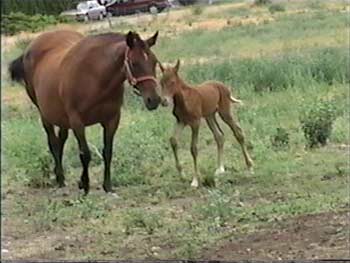
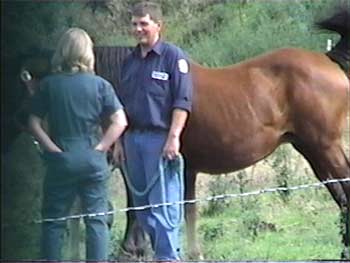
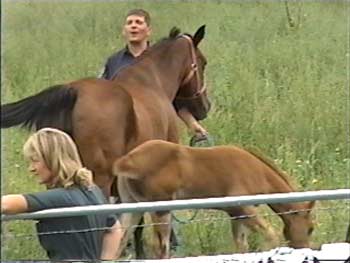
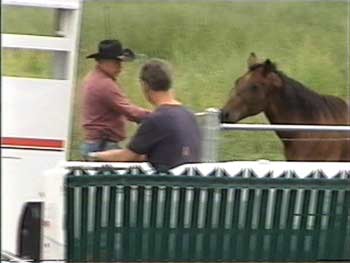
The images below are from the video (taken without the SPCA's knowledge) of the horses being seized by the SPCA on September 10, 2004. |
|
 |
 |
 |
 |
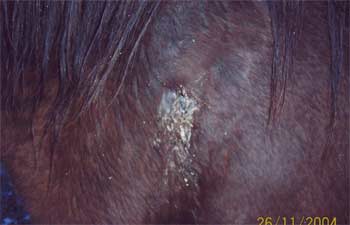
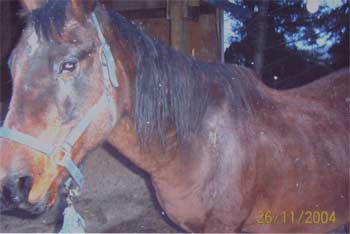
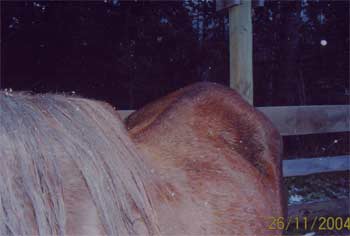
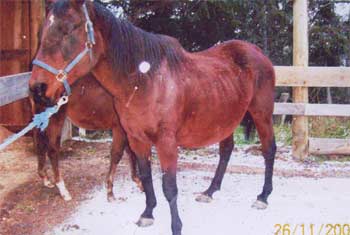
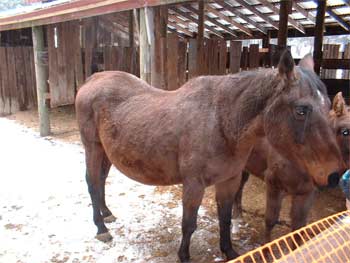
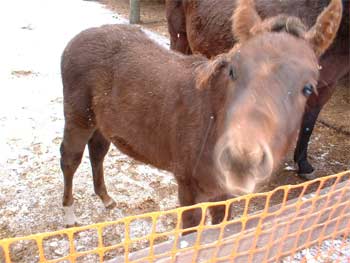
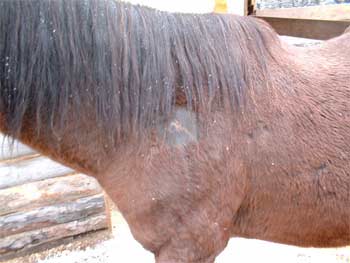
The images below were taken after court-ordered return, November 26, 2004, after being in the SPCA's custody. |
|
 |
 |
 |
 |
 |
 |
 |
|
| The Schwabs tell their story... | |
May 25, 2006 Frank and Idella Schwab To whom it may concern, Re: Unlawful and unethical practices by the B.C. S.P.C.A. in the seizure of our mare and foal on September 10, 2004 I, Idella Schwab, have concerns regarding the unethical and unlawful practices of the S.P.C.A. I wrote to the Hon. John van Dongen November 16, 2004, about our problem and concern for our horses. I was advised to make a complaint to the Special Provincial Constable complaints of the Police Services Division which I did. I was told to send my complaint to the S.P.C.A. which I had already tried. I was frustrated to think that there was no way to make the S.P.C.A. officers follow their guidelines set out in the PCA Act. They are like vultures preying on elderly, widowed, ill and handicapped persons. On the evening of September 9, 2004, the tenant who lives on the property where we board our horses (about ½ hour’s drive from our home) and feeds the horses for us every other day, phoned to say the mare was limping slightly but that her leg was not swollen. On the morning of September 10, 2004 my husband, Frank Schwab, went to the pasture as he does every other morning to feed and care for the horses. He also saw that the mare was limping slightly and knew that her ringbone arthritis was acting up and he put liniment on the ankle as he has in the past. At 12:48 p.m. September 10, 2004 I received a phone call from S.P.C.A. officer Richard Alberta who said he was at the pasture and that the mare was limping. I told Mr Alberta that my husband said the mare’s ankle was only slightly swollen and not warm to the touch and there were no open wounds. Mr Alberta told me that the mare’s leg was swollen to twice its size. I was shocked and said we would go there immediately. He said, “No, don’t come out, I have a vet coming and after the vet has examined the horse I will call and let you know what is happening. I waited all afternoon and he never called. At 2:20 p.m. the tenant called me to ask me if I knew the S.P.C.A. was there. I said and I did know and that the S.P.C.A. was waiting for a vet to arrive. She said the vet was there and it looked like they were waiting for a vehicle to haul the horses away. I asked the tenant if the mare’s leg was swollen to twice its size and she said, No, it was the same as it was in the morning. I asked her if she could take a picture of it. She said Yes and tried to take a picture with her video camera but the Senior S.P.C.A. Constable who was holding the mare, Brad Kuich (see enclosed video) stood in front of the leg so she couldn’t get the picture. She then used a zoom lens and videotaped the seizure from her bedroom window. The video proves the mare was not in critical distress as the S.P.C.A. later claimed, as she only limped when she turned and was grazing to her heart’s content. (PCA Act definition of critical distress is an animal that is so sick or injured that its life can’t be saved and has to be humanely killed quickly to end its suffering. Definition attached.) 3:30 p.m. September 10, 2004 The mare and foal were trucked away without the S.P.C.A. calling us and without a warrant. We learned after that the PCA Act says the S.P.C.A. is also supposed to first give an Offence Warning Notice to owners which states the causes of the “distress” and gives the owners a set time to “relieve the distress”. The S.P.C.A. did not give us an Offence Warning Notice either. But the Act does not say that the S.P.C.A. has to give an Offence Warning Notice or get a warrant if the animal is in “critical distress” (near death) so that is probably why the S.P.C.A. afterward said our mare was in critical distress in the newspaper. But if she really was in “critical distress” why didn’t the S.P.C.A. put her out of her suffering? (They tried to a month later and were stopped just in time.) The jolting of the horse trailer and because she dislikes being in a trailer so much, the S.P.C.A. caused the mare a lot of cruel distress and she would have been better left where she was happy and familiar and treated there as the Act says the S.P.C.A. is supposed to do. (S.P.C.A. Manual attached.) September 14, 2004 I couldn’t get any information from the S.P.C.A as to what I had to do to get our mare and foal back, or their veterinarian, until September 14th. Then Constable Kuich said the mare had laminitis which both my husband and I disputed. (Laminitis is more serious than arthritis but is not “critical distress” either, though the S.P.C.A. claimed it was.) I tried to talk to Dr Teresa Jacobson, the S.P.C.A.’s vet who attended the seizure (see video) to find out why she didn’t talk to us about treatment and I wanted to know why she thought the mare had laminitis. According to the PCA Act one must respond to the notice of seizure within two weeks or the S.P.C.A. can dispose of the animals anyway they wish. I had only three days left and I could not find out what they wanted so I had to hire a lawyer. Our lawyer, Rob McLeod of Kelowna, got the S.P.C.A. to agree to have our mare examined by another vet. They tried to choose which vet, but our lawyer insisted that our vet, Dr Sheila McDonald of Okanagan Equine services in Kelowna, be allowed. October 28, 2004 Dr Jacobson took an x-ray of the mare’s ankle which proved the mare did not have laminitis. And yet the S.P.C.A. continued to refuse to return our horses and continued their threats to dispose of her and to charge us for their “seizure costs”. October 12, 2004 Dr McDonald went early in the morning to examine our mare, just in time to stop the S.P.C.A. from killing our mare that day. Dr McDonald saw the x-ray taken on October 12th. Dr McDonald’s diagnosis was arthritis of the pastern joint. Dr McDonald reported that the mare’s overall condition dropped from a 9 to a 2 in the month she was in the S.P.C.A.’s custody. The mare and the foal were being kept in an unsafe, small corral with sharp thorny branches sticking out of the ground. There were pieces of metal lying on the ground and one piece was stuck in the ground with a wire wrapped around it at eye-level of the foal. There was water but no hay, supplement, grain, salt or mineral block. The mare was fed two flakes of poor-grade hay morning and night, total weight, 16 lbs. She was overdosed with phenylbutazone which can cause gastric ulcers, bone marrow depression, and kidney problems. The acepromazine she was given was not necessary as it is used to treat laminitis, which she did not have. The diet was inadequate for a horse her size while nursing a two month old foal. (This is a summary of Dr McDonald’s report which is attached.) What the S.P.C.A. was doing was cruel. They had scheduled the mare to be put down on October 12th, but Dr McDonald managed to examine the mare before the S.P.C.A. could destroy the evidence that they had illegally seized, misdiagnosed and starved this animal. How dare they try to make us pay for starving an animal! They will do anything to get their way. The S.P.C.A. was not happy with Dr McDonald’s report so they called in Dr Alex Wales whose report was much the same except he recommended a diet to get the mare back in shape. I do not think it was followed because six weeks later, when the court had ordered the horses returned to us, they were still in poor condition. (See photos attached.) I have attached the reports of Dr Jacobson, Dr Wales, and Dr McDonald. November 13, 2004 We, and about 20 other people, some who had their own bad experiences with the S.P.C.A. and some who knew that we had taken good care of our horses, held a demonstration on the road outside the Kelowna S.P.C.A. to try to make the public aware of what the S.P.C.A. had become. The S.P.C.A. believed that I had instigated it (I hadn’t) and (as our lawyer said), sold our horses to punish us. November 18, 2004 We appeared in court to try to get our horses back. The affidavit submitted by the SPCA contained a lot of untrue and fabricated material as well as unfactual accusations. Fortunately, the judge ruled in our favour. He ordered that the pasture be examined (the S.P.C.A. claimed it was no good). We suspected the S.P.C.A. would not pass the pasture though Dr McDonald had inspected and approved it. So we chose to pay a lot of money to have the horses boarded at Eight Mile Ranch with Kim Stinson, a horse expert. This put the S.P.C.A. in an awkward position because they had sold our horses and they couldn’t “fail” Kim’s place without a lot of questions being asked, so the judge ordered the S.P.C.A. to return our horses. November 26, 2004 The horses arrived at Eight Mile Ranch still in very poor condition (photos taken at this time attached) The mare was thin, her coat dull and matted, her hooves needed trimming. She had an oozing abscess on her left shoulder. The foal’s growth was stunted, he had developed a hernia and his teeth were brown instead of white. We had to pay $1800 for special feed and veterinary services to return them to something approaching their previous condition. The S.P.C.A. continued to say it was going to sue us $3800 plus court and legal costs for its “seizure costs” even though it knew that it had almost killed our horses and that the seizure was wrong. That was before our lawyer allowed it to see the video. May 9, 2005 Suddenly – after seeing the video the S.P.C.A. - wanted to “negotiate” and a meeting was held in our lawyer’s office with our lawyer, myself, my husband, Constable Kuich, Constable Kathy Woodward (who had nothing to do with this), the S.P.C.A’s lawyer, Donald Montrichard, but not Dr Jacobson, the vet who was being blamed for the warrantless seizure of healthy animals. My husband was not happy about some of the conditions the S.P.C.A. was trying to impose on us under threat of pursuing a legal action against us, but when he questioned the conditions, Mr Montrichard said it would cost us $50,000 to go to court and he always wins! We felt threatened and bullied by this man. We were told that we couldn’t disclose any of the conditions of the agreement and we were not to publicly blame the S.P.C. A. (At first they tried to get us sign that the S.P.C.A. had not broken any law and was only acting in the animals’ best interests!) Nor were we allowed to say how much money we had had to pay the S.P.C.A. and were not going to get back. If we had had enough money to fight them in court we would have and taken our chances. We had the video and that, plus the vets’ reports, should have won this case but we did not have enough money to sue the S.P.C.A and we were not sure that we would be awarded costs and damages. In all, this seizure cost us almost $20,000 Since this happened to us, we have heard of many cases worse than ours. People have been forced into bankruptcy, lost their homes, and livelihoods, some ending up depressed and with serious health problems as were both my husband and myself. In all cases the S.P.C.A. had seized healthy animals. I believe that because the S.P.C.A. can’t sell sick animals it takes healthy ones as well when making a seizure. Then they make monsters of cruelty out of the owners in the media to get donations. And they make sure the owners are convicted of cruelty and in many cases are restricted from owning animals again so the S.P.C.A. can sell the healthy animals it seized. It is time to stop the S.P.C.A.’s terrorism and the stealing of healthy animals. Please push for legislation and laws to make the S.P.C.A. honest. The S.P.C.A. should not mislead the public. They appeal to the public for funds to help feed and treat animals in their care and then use that money for lawyers and court cases. Please help animals and animal-owners of BC. Thank you, Idella and Frank Schwab |
|
An interview with Idella Schwab
|
|
Kelowna Courier: Vet gives contrary opinion on the condition of the horses
|
|
Kelowna Courier: Animal lovers protest the seizure
|
|
Kelowna Courier: Residents have launched a petition after the SPCA seized a popular horse and her colt from a neighbourhood pasture Posted By: AAS
|